
Menopause and Dry Eyes
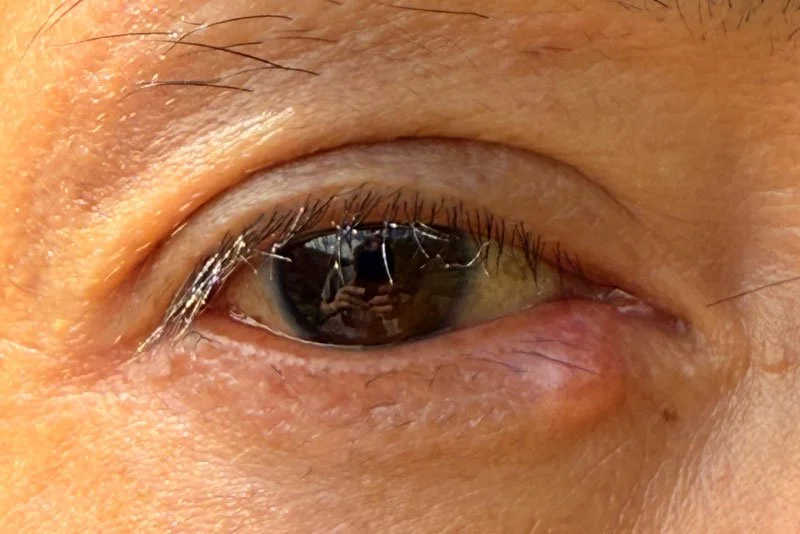
I’ve just turned 51 years old and I’ve started getting all sort of menopausal problems from cramps to anxiety and dry eyes.
Most people only know few menopause symptoms like hot flushes and brain fog, but there are actually 34 widely recognised issues. In fact, a comprehensive clinical study has identified from 62 to 80!
These menopausal symptoms are wide-ranging and can affect us mentally, physically and emotionally. It’s not surprising then that they can also cause vision issues. Common eye problem during menopause are dry eyes, blurry vision, light sensitivity, styes, blepharitis and glaucoma. It’s also around this time that people are diagnosed with presbyopia or old age sight.
What Causes Dry Eyes?
Dry eyes happen when your eyes do not make enough tears or when your tears evaporate too fast. During menopause, declining levels of estrogen, progesterone, and androgens can lead to a reduction in tear production and the oily layer of tear film. The outermost part of the tear film is known as the Lipid Layer. This is produced by the meibomian glands in the eyelids, and works to prevent evaporation.
Dry eyes may not sound very serious, but it can cause inflammation and become very painful. It is also linked to styes, blepharitis and blurry vision. I was surprised to find that dryness can lead to spots: clogs in the Meibomian glands inside the eyelids can cause infection.
My Experience
I felt embarrassed and confused when I recently got Stye again. Not only they’re painful and itchy, but they stand out on the face. I didn’t understand why it was suddenly happening, especially as I was regularly doing Natural Vision Therapy practice. I had several important Vision Yoga events around this time, and I felt like I was a fraud.
I knew that wearing contact lenses can cause stye and dry eyes, as I used to get them before. I thought those days were over when I improved my eyesight! It never occurred to me that menopause would bring them back.
Through personal research, I learned about the link between menopause, dry eyes and styes. I was relieved but also very frustrated by the lack of awareness. When I mentioned stye to a menopause specialist, she had never heard about the relationship. Even though, dry eyes are a very common issue that affects roughly 50-60% of menopause and perimenopausal women.
Severe dry eyes can cause temporary, blurry vision because an unstable tear film distorts the light entering your eye.
When my dry eyes and stye was at its worse, my vision became noticeably blurry. I felt upset because it seemed like my eyesight was reversing back. In desperation, I tried using preservative free eye drops for severe dry eyes. For about 5 - 10 minutes, I saw brilliantly and sharply again! This confirmed to me that this was a temporary issue caused by dry eyes and I became confident that I can restore my vision again.
I recently taught a Vision Yoga class, and one of the participants told me how frustrated she was that she started experiencing severe dry eye problem during menopause. She said that all her life, she had brilliant eyesight, but everything changed during menopause. She visited many opticians and ophthalmologists, and nothing really made any difference. They never explained to her why she was suddenly getting dry eyes or the cause of her deteriorating eyesight. They prescribed expensive eye drops and IPL therapy, which only helped for a short time. She was very appreciative to learn natural way to combat dry eyes, as she felt that this would help her to better manage the problem.
Eye drops and IPL therapy are good solution for a short time, but they don’t eradicate the problem. It might feel like a quick fix, but you’ll have to use them repeatedly, which is expensive and doesn’t address the root cause.
Natural Solutions
One positive outcome from this horrible experience is that I’ve become somewhat of an expert on natural remedies for dry eyes. Once my dry eye problem improved, my stye and vision started to improve too!
Research shows that extended exhalations and deep abdominal breathing stimulate your body's relaxation response. This nervous system shift significantly increases tear fluid secretion and relieves dry eye symptoms.
Regular blinking is another natural way to keep the eyes healthy and moisturised. There are 3 types of tears; emotional, reflex and basal. Baseline tears are in your eyes all the time and keep your corneas lubricated, nourished, and protected from dirt and infection.
You can read Yoga for Eyes: 5 tips for relieving Dry Eyes to find out the other methods I used.
A major issue
Dry eyes are not exclusive to menopausal women; they are one of the most common modern eye complaints. In fact, overuse of screens like mobile devices and computers significantly reduce the blink rate and further exacerbate the problem.
Just visit a big pharmacist, and you’ll see a whole row of medication for this issue.
People in their midlife are often diagnosed with presbyopia and other eyesight issues when they’re likely to be suffering from dry eyes. Like me, it may be a temporary problem and it’s worth exploring what’s really causing the blurry vision.
Once you start wearing glasses, your eyesight rarely improves.
We live in a visual world, and for sighted people our eyes are one of the most important senses. We use our eyes for everything from opening doors to looking at our phones to getting about on the street. It’s worth knowing how to take care of them.
I’ve now released a special Vision Yoga online course on dry eyes and digital eye strain. This course will show you a holistic way to look after your vision in the modern world.